
Buying a home, getting ready to sell or simply planning the year’s upkeep can all bring the chimney into focus. An inspection report might mention it, or a neighbor might point out something odd on the roof. People in North Vancouver who search for “chimney cover replacement” at moments like these want straight facts, and that is what this page offers: a calm, practical look at chimney cover installation, what it involves and how to plan for it sensibly.
A masonry chimney has more parts than most people realize, and each one can need repair on its own. From the top down, you will usually find:
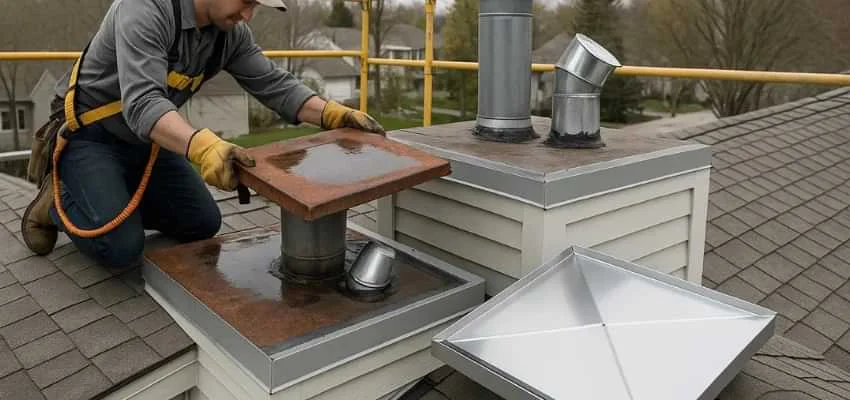
Inside the house sit the damper, the smoke chamber, the firebox and sometimes an ash dump. Factory-built chimneys swap the brick for a metal flue inside a framed chase with a metal cover on top.
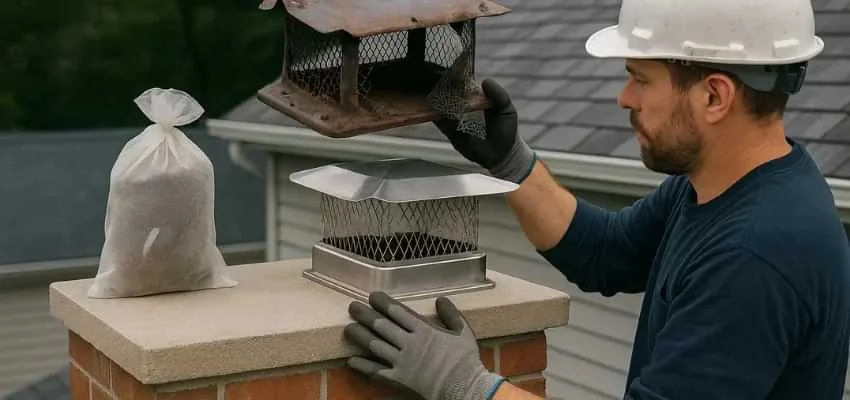
The crown protects the brick and the cap protects the flue, which is the simplest way to keep them straight. On the roof, the crown is the sloped top surface of the masonry, ideally with an overhang so water drips clear of the chimney walls. The cap is a metal hood with mesh sides, clamped or fastened over the opening. We check them separately, since one can fail while the other looks fine: we often find a shiny new cap sitting on a crown full of cracks. Both deserve attention, and fixing one never covers a problem with the other.
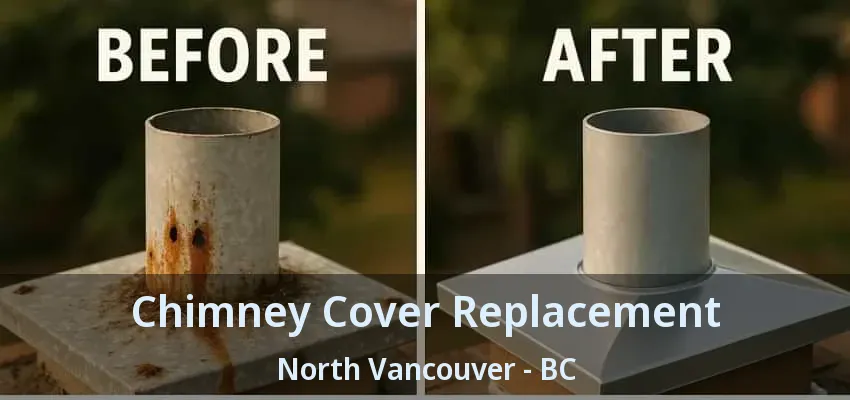
People use the term for a few different parts, so it helps to be specific. On a masonry chimney, a cover usually means the cap over one flue or a full-width cover that shelters the whole top, crown included. On a factory-built chimney, it often means the chase cover, the metal top of the framed box around the flue. All three keep rain and debris out, but they are sized and installed differently. When you ask about “chimney cover replacement”, a photo of the top of the chimney from the yard lets the company confirm which part you mean before anything is ordered.
Your chimney is most likely leaking at the crown, the flashing, the cap or through porous brick, though the stain rarely appears where the water gets in. Rain that slips past a cracked crown may travel down inside the masonry and show up at the firebox. Flashing leaks tend to stain the ceiling or the attic framing next to the chimney. An uncapped flue lets rain fall straight onto the damper, where it causes rust and a damp smell. Porous brick can wick moisture through the whole stack during long storms. We often test one area at a time with a hose, starting low and working up, so the repair targets the real entry point rather than a guess.
A chimney repair visit normally starts with an inspection to confirm the problem and check for anything related. The technician protects the area around the fireplace and, for exterior work, sets up ladders or roof anchors. Then the damaged part is removed or prepared, whether that means grinding out mortar, cutting away old sealant, unbolting a cap or opening a damper assembly. New materials go in, and the work is checked for fit and weathertightness. At the end you should see the finished work or photos of it and hear about anything else that turned up along the way.
We suggest once a year for most chimneys, with extra visits after anything unusual. A yearly look from the roof and up the flue shows us how earlier repairs are holding and whether anything new has appeared. Events that justify an extra check include a strong windstorm, hail, a lightning strike nearby, a roofer working around the chimney and any time an appliance is added or swapped. A chimney you never use is not exempt; some of the worst weather damage we find is on chimneys nobody has looked at in years, simply because no one noticed the warning signs inside.
Size, metal and access are the main factors. A standard single-flue cap is quicker and simpler than a full-width cover made for a chimney with several flues, and custom chase covers are fabricated to the exact dimensions of the chase. Stainless steel and copper cost more than galvanized steel but tend to last longer. Roof height and pitch affect how long the setup takes. Extras such as a new storm collar, crown sealing or repairs found under the old cover add to the total. A written quote for chimney cover installation should list the material, the size and what happens to the old cover.
The questions that matter most are about cause, scope and surprises, and any capable chimney company can answer them in plain words. Cause: why is this happening, and how do you know? Scope: which parts are included, which materials, and is the chimney top part of the job? Surprises: what happens if rotten framing or a cracked flue tile turns up halfway through? It is also fair to ask who will be on your roof, how long new mortar needs before a fire and how the site will be left. We welcome these questions, because they lead to fewer misunderstandings later.
Choose a chimney repair company that inspects before it quotes, explains the cause of the problem and shows you evidence such as photos. A good company will tell you what it plans to fix, what materials it will use and what the work will not cover. Ask whether its own crew does the work, how it protects your home and roof and how it handles hidden damage found mid-job. Read recent reviews for comments about communication and clean-up. Be cautious about anyone who wants a large rebuild without showing why, or who only offers to coat everything with sealant.
We work with people who live in their homes and with people who look after rental units around North Vancouver. Either way, you get a clear explanation of the work and what we found. Request a quote for one home or several and we will plan the visits with you.
Brush, vacuum, inspect: how Chimney Cleaning works for North Vancouver fireplaces
Why North Vancouver homeowners book Chimney Sweep visits yearly
Flue brushing, damper checks, cleanup: Chimney Sweep Services in North Vancouver
Smoke backing into the room? Call Fireplace Experts in North Vancouver
A cleaner-looking fire after Gas Fireplace Cleaning
Fewer surprises mid-winter with Gas Fireplace Maintenance in North Vancouver


