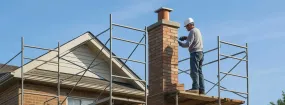
A chimney stands out in the open all year, taking rain, wind, sun and, in many places, hard freezes with no shelter at all. Sooner or later something on it needs attention, whether that is a loose cap, a tired mortar joint or a part inside the flue. If you searched for “chimney restoration”, this page gathers the questions homeowners in North Vancouver ask most often about chimney masonry restoration, answered plainly so you can judge what your own chimney needs and what can wait.
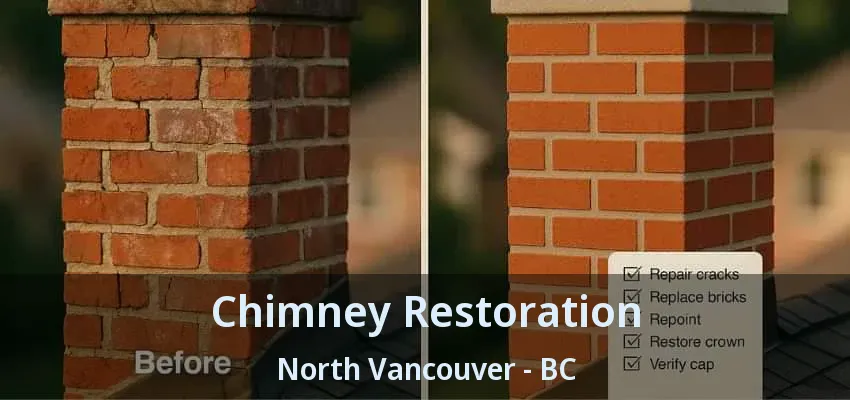
Repair usually targets one problem, such as a leak or a damaged cap, while restoration brings a worn chimney back to sound condition as a whole, often with attention to how it originally looked. A restoration project might combine repointing, brick replacement, a new crown, new flashing, a cap and work inside the flue in one plan. On older homes, it also means respecting details like corbelled brickwork, decorative caps or original mortar colors. If you are researching “chimney restoration”, expect an inspection first and a written scope that lists each part of the chimney and what will be done to it.
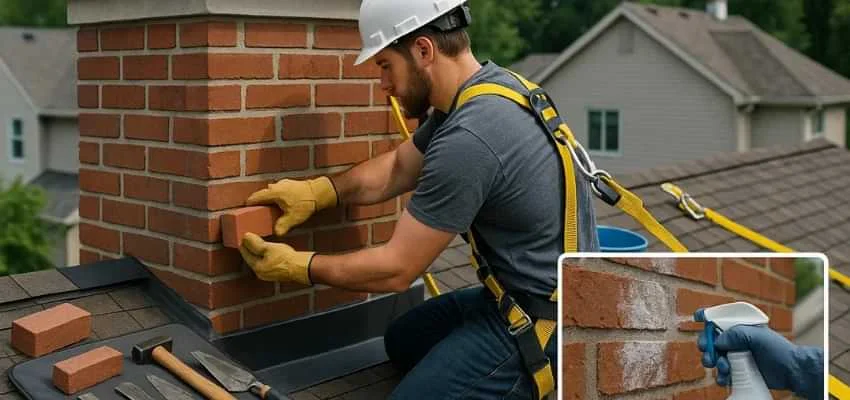
Most chimneys can be repaired, and a rebuild only makes sense when the structure itself is no longer sound. Repairs cover jobs like replacing damaged bricks, repointing worn mortar, building a new crown or resealing flashing. A partial or full rebuild comes into play when the chimney leans, when many bricks are crumbling at once, when mortar has failed deep inside the stack or when the top courses move by hand. The usual approach is to save whatever is solid and rebuild only the section that cannot be saved, which is often the part above the roofline.
Tuckpointing is the repair of worn mortar joints between the bricks of a chimney. The old, crumbling mortar is raked or ground out to an even depth, and fresh mortar is packed into the joints in layers, then shaped so water runs off the face. Strictly speaking, the word once described a decorative technique using two mortar colors, but today most people use tuckpointing and repointing to mean the same job. The aim is to seal the joints again so rain cannot soak into the chimney, which keeps the bricks tight and protects the structure for many more years.
Your chimney is most likely leaking at the crown, the flashing, the cap or through porous brick, though the stain rarely appears where the water gets in. Rain that slips past a cracked crown may travel down inside the masonry and show up at the firebox. Flashing leaks tend to stain the ceiling or the attic framing next to the chimney. An uncapped flue lets rain fall straight onto the damper, where it causes rust and a damp smell. Porous brick can wick moisture through the whole stack during long storms. We often test one area at a time with a hose, starting low and working up, so the repair targets the real entry point rather than a guess.
Joints that have shrunk back from the brick face, cracked along the edges or turned soft and powdery are the signs we look for, and they are usually visible from a short distance. Healthy mortar, by contrast, fills the joint, sits tight to the brick on both sides and is shaped to shed water. On the roof, a light scrape with a tool tells us whether it still holds together. We also note where the damage sits: the top few courses and the weather-facing side usually go first. Repointing those areas promptly keeps water from reaching the core of the chimney.
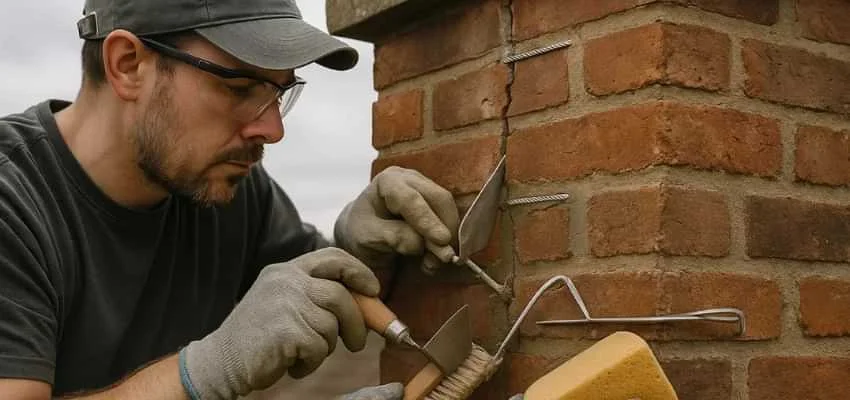
Chimney tuckpointing is done in three stages: removing the damaged mortar, filling the joints with fresh mortar and finishing them to shed water. Old mortar is cut out with a grinder or chisel to an even depth, a common guideline being about twice the width of the joint, and the dust is cleaned away. New mortar, matched in strength and color to the original, is packed in layers so each one firms up before the next. Masons often mix small test batches and let them dry, because wet mortar looks darker. Finally, the joints are tooled to match the rest of the chimney.
The aim is to change as little as possible while making the chimney sound. That starts with matching materials: softer, lime-based mortar for old soft brick, salvaged or carefully chosen replacement bricks and joint profiles copied from the original work. Decorative features such as corbels, banding or clay pots are repaired or rebuilt to the same pattern rather than simplified. Modern parts, like a stainless liner or a top-sealing damper, can usually be added without changing what you see from the street. Ask for photos of earlier chimney masonry restoration projects on homes of a similar age.
Small chimney repairs, such as replacing a cap, sealing a crown or freeing a damper, often take a few hours. Mid-sized jobs like new flashing, a new chase cover or a fan installation usually fit into a day. Larger masonry work, including repointing an entire stack or rebuilding the section above the roof, can take several days, because mortar and concrete need time to set between stages. Weather adds to the schedule for anything done outside, since rain and cold delay masonry. Ask for an estimate of both working time and total calendar time before the job is booked.
Repointing is not a recurring yearly job; a properly matched and packed joint can last a generation. When we see fresh tuckpointing fail within a few years, it is usually for one of three reasons: the new mortar was too hard or too soft for the brick, it was smeared over old mortar instead of packed into cleaned-out joints, or water from a cracked crown kept soaking the stack. We address all three on our jobs. After that, the chimney top and the weather-facing side are the spots to watch, and touching up a handful of joints there keeps the rest sound.
Renovations, inspections and sales are all good reasons to check the parts of a home that are usually out of sight. We can fit the visit around your contractors or your listing date. Request a quote for chimney masonry restoration and mention your timeline.
Brush, vacuum, inspect: how Chimney Cleaning works for North Vancouver fireplaces
Why North Vancouver homeowners book Chimney Sweep visits yearly
Flue brushing, damper checks, cleanup: Chimney Sweep Services in North Vancouver
Smoke backing into the room? Call Fireplace Experts in North Vancouver
A cleaner-looking fire after Gas Fireplace Cleaning
Fewer surprises mid-winter with Gas Fireplace Maintenance in North Vancouver